
The role of women in the church is a point of passionate debate. In Reformed circles, it seems that some experience confusion over the Biblical boundaries respecting the nature of leadership and teaching in which women are biblically permitted to do. As a woman who has been a pastor’s wife and missionary for many years, it certainly is very personal topic for me.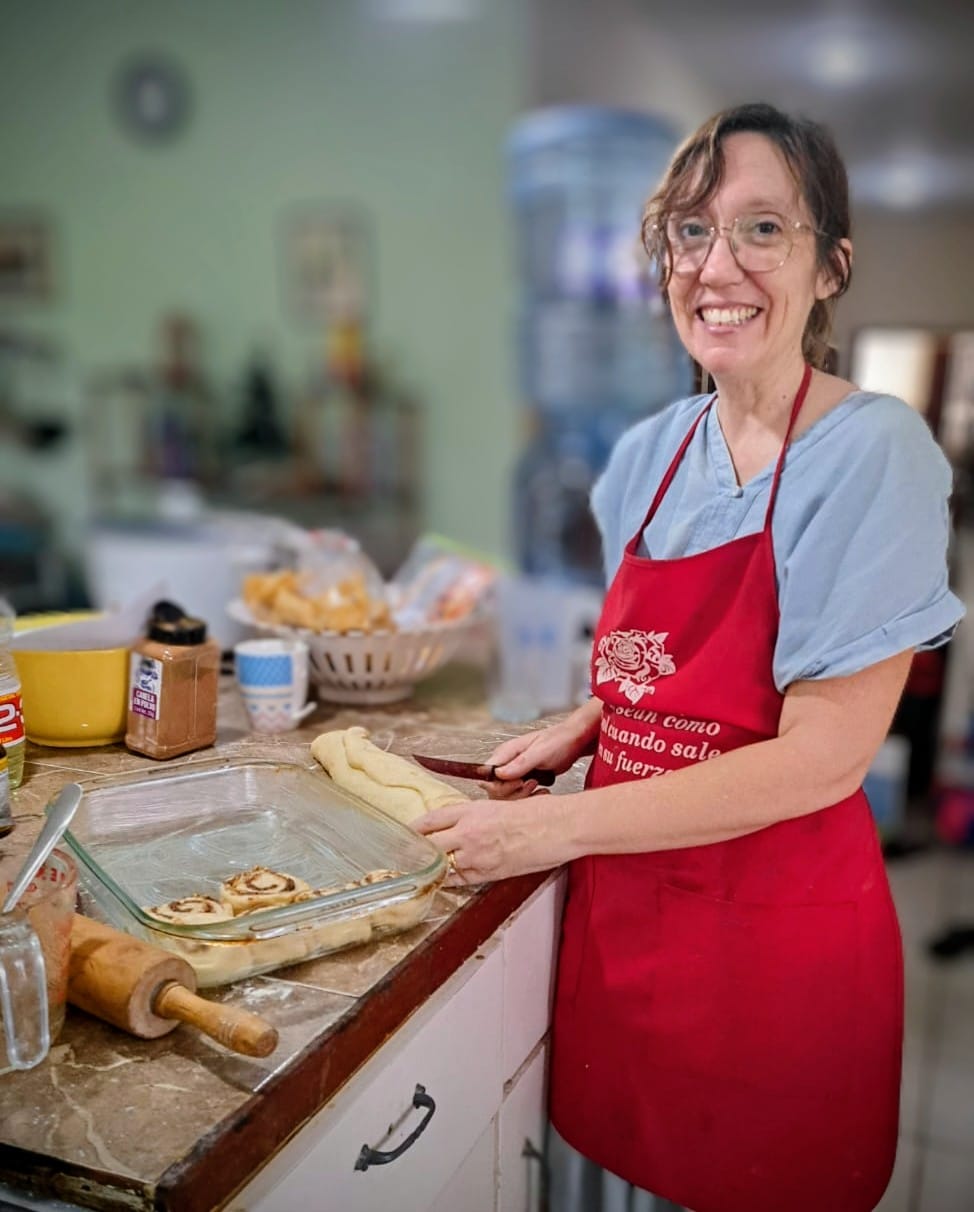
I was one of only a handful of women in my college major, Biblical Studies, since most of the students were preparing for pastoral ministry. During that time, I was an egalitarian who believed the pastorate was equally open to men and women. I keenly felt the sting of being told I didn’t have the same gifts as the young men around me and wrote several exegetical papers arguing how the biblical texts supported women pastors. Even as I studied and wrote, I had seeds of doubt that my position actually represented the texts honestly. Yet it was hard to get past the offense of being told that my gender held me back from doing great things for God. In being completely honest with myself, I had to admit I was searching for a way out of the clear meaning of the text, because the biblical position didn’t fit with the world as I saw it.
I no longer hold that egalitarian position. Instead, I enthusiastically embrace what I now believe to be the clear teaching of Scripture and the witness of church history: that men and women have different roles in the home, church, and society. What changed my mind? In short, the change began when I started seeing the power and importance of motherhood and children. Because our society sees little value in children, it also considers pregnancy as an inconvenience and caring for young children as a poor use of a woman’s gifts and skills. In contrast, I saw how important women’s roles actually are in society. I saw that when feminists tried highlighting the few women in history who did “great things”—in science, in literature, in government—they were inadvertently devaluing the amazing things that women have always done. When the value of children in society is diminished, so is the value of the work, gifting, and expertise it takes to care for them.
It isn’t just the value of children which has been diminished in our society. Other gifts that women naturally bring to bear have been devalued. In cultures all over the world, women are the ones who care for those who are aging or sick. Women are biologically designed to be nurturers, even if many women today haven’t developed those nurturing skills.
Yet another gift women tend toward is that of creating beauty in their environment. It is clear that most of the great artists of the world have been men—but that doesn’t mean women aren’t artistic or have been pushed down and repressed. The everyday folk art that brings beauty into the family and community is often, all over the world, the sphere of women. Our cold, utilitarian society sees no worth in these things, but if we are talking about human flourishing, it is very valuable.
Meal making is another work that is traditionally in the realm of women and that is both important and sadly undervalued. Human beings require roughly three meals a day—meaning we spend a lot of our lives eating. Mealtime is important socially, as a way to bring family, friends and communities together. Preparing an appealing meal is a creative act. All over the world, women are the ones who manage to turn local fruits, vegetables and animals into something that feeds body and soul. When we go to fancy restaurants to enjoy international foods the chefs are often men. But who designed and developed those very meals? It is probably safe to assume that every beloved traditional food from any part of the world was designed and perfected over the centuries by women.
Even if one can see the important role women have always had in the world, there is still a huge problem. A genuine reality is that many (most?) societies place little value on what women do—caring for children, caring for the sick, making meals and creating beauty in the home. It would be impossible to deny that women are often overlooked, devalued and even mistreated. But while our world admires and respects power, influence, and authority, as Christians, we uphold a very different set of values. God uplifts the little child, the poor and needy, the orphan, the sick, the aged, in short, the “least of these.”
In the Bible we are taught that caring for the weak and needy is among the most noble and valuable of roles. We are shown the importance of beauty and spiritual connection in our lives. In the world, we are told the most valuable roles are those that give us the most power and influence. The worldly view is very understandable, as it seems to be the best way to navigate a world where leaders lord their power over those under them, and where a lack of justice leads to deep suffering. However, in the church, to the extent that we as women have felt like the men in leadership have lorded their authority over us is the extent to which our institutions are failing to live up to the teachings of Jesus.
In my decades working in church ministry, I have felt the sting of the “invisibility” of who I am as a gifted Christian woman in a world dominated by men. Pride and “lording it over” —in other words, worldly leadership–at times seem too common. Sadly, a church or Christian organization can promote women in leadership and still fail to treat women with respect. I have seen humble pastors in very conservative churches and arrogant leadership in organizations that have a written statement of the value of women. I sometimes wonder if an organization substitutes a “pro-woman” statement or a change of theological position as an external means to promote the humility lacking in its leadership. It is easier to create statements than to be a humble leader who acknowledges the gifts and listens to the wisdom of those under you.
But we need not despair—we know from the Bible that the very people who are overlooked and despised in the world’s eyes are the most highly valued in God’s eyes. We don’t have to work for the applause of the world—even a worldly church community. We are working for the applause of the One who said, “Blessed are the meek for they shall inherit the earth.” God uses the weak things of the world to advance His kingdom. As a woman, I don’t have the same “voice” in the church, but that hasn’t hindered the work of God in and through me, even if at times it has closed the door to certain ministry or leadership positions.
We can imagine the question arising even in a church context in which the pastor, the elders, and the deacons serve from a place of gentleness and humility—that there mighty be a sense in which a woman can’t use her gifts if she isn’t allowed to advance to a leadership role. I would argue that we as women are more free to serve in the church by following the biblical model. God’s Word shows that someone with a title—pastor, elder, deacon—is no better than a person without one. These officers are given as a blessing to serve the church with a certain set of gifts, responsibilities, and position. We can acknowledge, however, that the title itself can bring certain limitations. My husband is a pastor. When he goes out in the community and mentions his occupation, it sometimes opens doors for him to share the gospel. Other times, it closes doors because it makes the people he is around feel uncomfortable. It is the same in the church. Many people seek out the pastor and the elders to share with them their struggles. Other times, a person may shy away from approaching a leader. Women by their nature as nurturing mothers (whether they are biological mothers or not), tend to be easy to talk to and more approachable for those who may be struggling with sin, or abuse, or a variety of delicate situations. God has set up the church for certain godly and mature men to have leadership roles. Because women don’t have a church office, most churches are filled with godly, mature women without titles. This opens as many doors as it closes. The reality is that within our churches and communities there is so much ministry needing to be done that does not require a title or a platform to be executed. Every believer has been given spiritual gifts to be used to serve and build up others—not just church officers. And all service, no matter how humble and small, is valuable in God’s sight.
I hope in making my case for the role differences between men and women, I don’t marginalize the struggle women have faced in the church to use their gifts; even worse at times have been the victims of mistreatment and abuse. I know there are many real injustices faced by women in the church, the home and society. And we should work towards women being valued as vitally important members of these spheres, without mistakenly believing they need a to be an elder or a deacon or that they need to teach over men. I have deep concerns that the contributions of women are being devalued when we try to bring the kind of equality to male-female roles that blur their distinction. I long to see the church rediscover its prophetic voice, promoting the values of Christ’s kingdom—values of meekness, of serving the “least of these”, of beauty and of love.
Women’s voices, although traditionally quieter, always have spoken powerfully to these very kingdom values that the church should be trumpeting. Our biblically grounded theology is a theology of the cross. It tells us that through suffering and weakness true goodness and beauty shine forth. This is why I don’t aspire to be given a title—be it “deaconess” or “shepherdess,” nor to be part of the deliberation along with those who govern the church. Those titles, I would argue, don’t reflect the best biblically grounded theology. And I would rather seek what I am gifted and called to do as a woman, rather than seek a leadership role which makes me “almost as good” in worldly eyes as the elders or deacons. Instead, I suggest that what churches need is to value the biblical role of women.
The New Testament gives us some powerful examples of women in ministry. We see women who followed Jesus and had an important role from the earliest moments in the church (see Luke 8:1-3; Acts 1:14; Acts 16:14-15, 40; 2 Timothy 1:5; Acts 18:1-3). They had important roles but were neither apostles, elders nor deacons. A woman is just as valuable and useful as a member of Christ’s church without any title or governing role, and at least as free to serve Christ. I have tried arguing in this short article that women are indeed indispensably important in the home, the church and society; and even without a leadership role and title, they can fulfill the service God has called them to. Furthermore, in embracing their biblical role, we can rediscover important biblical values of love, beauty and service that contrast sharply with the worldly values of our day.